
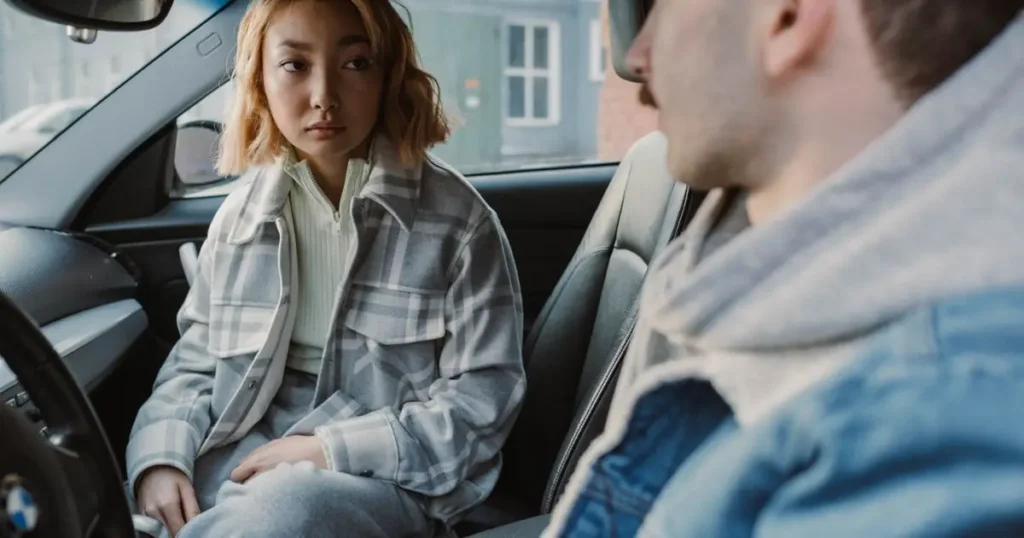
There’s a version of being injured as a passenger in a Utah car accident where fault isn’t even a question about you. You were in the passenger seat on I-15 through Draper, riding along on 12300 South, carpooling to work at the Point — and someone else’s decision put you in an ambulance. Maybe it was the other driver. Maybe, hard as it is, it was your friend or family member behind the wheel.
Passengers occupy a unique position in Utah injury law: you’re the one party in the crash who is almost never at fault — and that makes your claim structurally cleaner than any driver’s. It also raises questions nobody wants to ask out loud, starting with the big one: do I really have to claim against someone I love? This guide answers it — and walks through how being injured as a passenger in a car accident in Utah actually plays out.
Quick Answer: Can I file a claim if I was injured as a passenger in a Utah car accident my friend or family member caused? Yes — and it’s an insurance claim, not a personal attack. A passenger injured by any driver’s negligence claims against that driver’s liability insurance, including a friend’s or family member’s policy; this is precisely what the coverage exists for, and it doesn’t require suing anyone personally in the vast majority of cases. Passengers can often access multiple coverage sources at once: PIP for initial medical bills, plus the liability policies of every at-fault driver in the crash.
Why the Passenger Claim Is Structurally Stronger
Driver claims live and die on comparative fault — percentage disputes that shave settlements point by point. Passengers largely skip that war. Barring rare conduct (grabbing the wheel, knowingly riding with an obviously impaired driver — more on that below), a passenger contributed nothing to the collision, so the insurers can’t run their favorite play against you.
What replaces the fault dispute is a coverage question, and it usually breaks in your favor:
- If the other driver caused it: you claim against their liability policy, exactly as their victims in the other car do.
- If your driver caused it: you claim against your driver’s liability policy.
- If fault is shared: you can claim against both policies proportionally — passengers are the one party who can recover from every negligent driver in the crash without discount for their own conduct.
- Underneath it all: PIP coverage (typically from the vehicle you occupied) pays your initial medical bills regardless of anyone’s fault, and underinsured motorist coverage can add a layer when injuries outrun the at-fault limits.
Identifying and sequencing all of those policies — before any single insurer anchors the claim to just one — is exactly what a Draper personal injury lawyer does in the first weeks of a passenger case, and it’s routinely the difference between a claim priced against one minimum-limits policy and one that reaches every available layer.
“But It’s My Sister’s Insurance”
This is the conversation that stalls more passenger claims than any legal obstacle: the injured passenger who won’t “do that” to their driver.
Reframe it the way the insurance system already does. Your sister bought liability coverage for exactly one scenario — someone gets hurt because of her driving. The claim is presented to her insurer, handled by her insurer, and paid by her insurer; she cooperates by reporting the crash, which her policy requires of her anyway. In the overwhelming majority of passenger claims, no lawsuit against the driver ever exists — and in the rare cases where filing is procedurally necessary to preserve a claim, it remains a dispute with the insurance company wearing a formal costume, not a rupture with your family.
What actually harms relationships is the alternative: an injured passenger quietly absorbing medical debt and lost wages to spare a driver whose premiums were paid precisely so no one would have to.
One honest caveat, because you’ll hear it from adjusters: Utah’s comparative-fault framework can reach a passenger who knowingly rode with a plainly impaired driver. It’s a narrow argument, fact-heavy, and frequently overclaimed by insurers — treat it as a reason to get advice, not a reason to stay silent.
The Passenger’s Playbook After a Draper Crash
- Get medical care immediately, in your own name. Your treatment record is independent of every driver’s story — keep it that way, complete and continuous. Delayed symptoms follow passengers exactly as they do drivers.
- Collect everything a driver would. Photos, both drivers’ insurance details, witnesses. Passengers often assume “the drivers will handle it” — but their files will be built for their claims, not yours.
- Give no recorded statements — to either side’s insurer — before advice. In shared-fault crashes especially, each insurer wants your account shaded toward the other’s liability.
- Watch the crash’s fault dispute without joining it. In a multi-vehicle event like the pileups we covered in our Point of the Mountain guide, the drivers’ percentage war can rage for months; your claim rides above it, collectible from whichever combination of insurers the fault lands on.
- Mind the deadlines. Utah’s four-year injury statute of limitations under Utah Code § 78B-2-307 is the outer wall; the practical clocks — footage, witnesses, policy notice requirements — run in days and weeks.
Personal Attention for the Person Everyone Overlooks
Passengers are the claim the system forgets: the drivers have insurers, the insurers have each other, and the person in the passenger seat has paperwork nobody sent. Our answer is the same promise we make every client — big firm settlements with small firm personal attention. Porrazzo Rawlings Accident & Injury Law has recovered hundreds of millions for injured Utahns while keeping our caseload deliberately small, so you are never just a case number: one real attorney handles your claim from first call to resolution, never a paralegal or case-manager relay. In a passenger case that touches family, that continuity matters twice — the attorney managing the insurance dispute is the same one who understands why it needs to stay an insurance dispute. Several of our attorneys are former adjusters; we know how carriers quietly under-serve passenger claims, and our Utah personal injury practice page covers the full framework we bring instead.
Frequently Asked Questions
Will claiming against my friend’s insurance raise their rates or get them in trouble? The crash itself — already reported — is what insurers rate on, not your decision to use coverage that exists for you. Your claim doesn’t create new “trouble” for the driver; it directs existing coverage to its purpose.
Both drivers blame each other. Do I have to wait for them to sort it out? No. Your PIP benefits start immediately regardless of fault, and your injury claim can be asserted against both liability policies while their percentage dispute proceeds. Passengers recover from whatever allocation results.
I wasn’t wearing my seatbelt in the back seat. Does that end my claim? No — it may become a damages argument in limited circumstances, but it doesn’t erase the negligent driver’s responsibility for causing the crash. Get the specifics reviewed rather than self-disqualifying.
Can passengers and the driver from our car all get help from the same place? Often yes, when everyone’s interests align — and we’ve answered the full version of that question (including when interests conflict) in our popular guide on whether two people can use the same law firm after a car accident. Where genuine conflicts exist between claims, ethics rules sort that out at intake, honestly and early.
Hurt in Someone Else’s Crash? Get Your Own Advocate — Free
If you were injured as a passenger anywhere in Draper or along the I-15 corridor, you deserve a claim built for you — not a seat in someone else’s. Call (801) 553-0505 to speak directly with an attorney. Consultations are free, we’re available 24/7, and with our zero-fee guarantee you pay nothing unless we win or settle your case.
Disclaimer: This article is for informational purposes only and does not constitute legal advice. Reading this article does not create an attorney-client relationship. Every case is different, and no guarantees or promises can be made regarding the outcome of any claim or the amount of any compensation. Past results do not guarantee future outcomes. If you have been injured, consult directly with a qualified Utah attorney about your specific situation.