
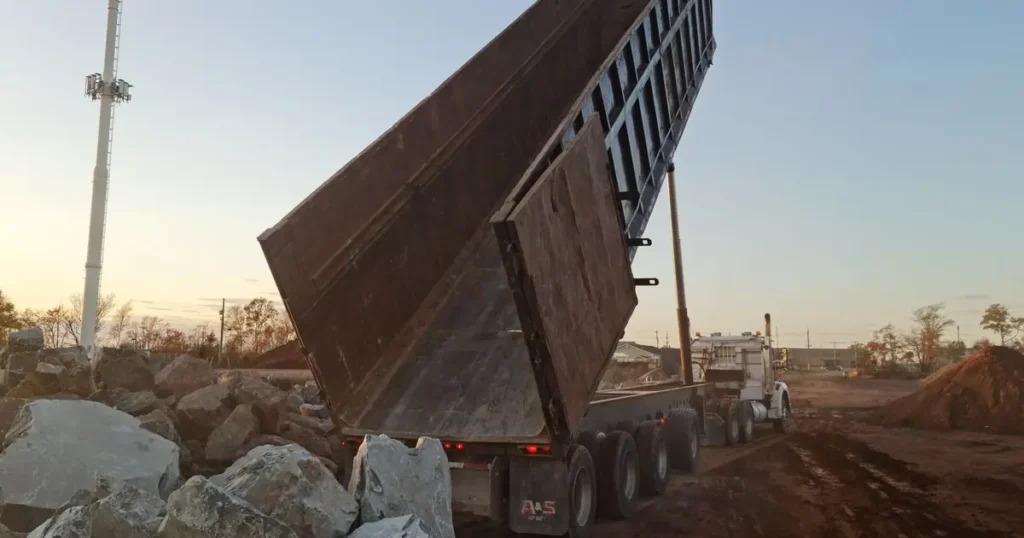
South Jordan is being built in real time. Daybreak adds new villages yearly, Bangerter’s intersections are becoming interchanges, and infill construction runs from the Jordan River to Mountain View Corridor. All of it moves on heavy trucks — and Utah’s construction truck accident claims move with them: dump trucks cycling to fill sites, cement mixers on delivery windows, gravel haulers, flatbeds of lumber and steel, and equipment transporters threading residential streets never designed for them.
When one of those vehicles causes a crash — or sheds part of its load into your windshield at 50 mph — the claim that follows is its own species. Here’s how a construction truck accident in Utah gets untangled, and what South Jordan drivers should know before talking to anyone’s insurer.
Quick Answer: Who is liable in a construction truck accident or debris strike in Utah? Liability can reach the driver, the trucking or construction company, and sometimes the project’s contractors — Utah law requires loads to be properly secured, so cargo and debris that escapes a truck is strong evidence of negligence by the hauler. Injury claims work like other Utah crashes (PIP pays first medical bills, the liable side’s commercial policy pays the rest), but identifying the right company among a project’s layered contractors is the step that decides whether the claim succeeds.
The Crash Types a Building Boom Produces
Turning and blind-spot conflicts. Heavy trucks entering and exiting site gates along 11400 South, Daybreak’s construction frontages, and the Bangerter work zones make wide, slow turns across traffic with substantial blind zones. Professional drivers bear a professional standard of care in those maneuvers — a car lawfully proceeding through has the right of way over a truck swinging across it.
Unsecured and shedding loads. Gravel spray, lumber shift, equipment straps that let go: Utah’s traffic code requires loads to be secured so nothing drops, sifts, or escapes onto the roadway, and the state’s crash and safety data (Utah DPS Highway Safety Office) reflects how dangerous roadway debris events are at arterial speeds. A rock through a windshield or a swerve-and-crash caused by dropped cargo is not “just one of those things” — it’s typically a securement failure with a responsible company behind it.
Mud, gravel, and site trackout. Construction exits that coat the roadway create skid hazards for everyone downstream. When trackout contributes to a crash, site-control obligations pull the contractor into the liability picture.
Stop-and-go corridor rear-endings. Loaded trucks need far more stopping distance than the traffic around them; a hauler that rear-ends stopped cars in the Bangerter construction queues has almost always violated following-distance duties — the same corridor dynamics we mapped in our Bangerter Highway claims guide, now with 40 tons behind them.
The Real Work: Finding the Responsible Company
Here’s what makes construction-vehicle claims genuinely different: the org chart. A single Daybreak site can involve a developer, a general contractor, excavation and concrete subcontractors, independent owner-operator haulers, and material suppliers — each with its own commercial insurance, each positioned to point at the others. The truck that hit you might be owned by one company, driven by another’s employee, hauling for a third, under a fourth’s site direction.
Sorting that chain is the claim. It determines which commercial policies respond (construction-industry policies often carry substantial limits), whether company-level negligence applies (overloaded trucks, impossible schedules, inadequate securement training, poor site traffic control), and who receives the preservation demands for the records that prove it — dispatch logs, load tickets, site safety plans, and vehicle telematics, all on short retention clocks. Mapping the chain before the evidence cycles out is precisely the first-week work of a South Jordan truck accident lawyer — and it’s why “the driver’s insurer made an offer” is rarely the full story in these cases.
Two familiar Utah rules still anchor everything: your own PIP coverage pays initial medical bills regardless of fault, and comparative negligence governs any shared-fault arguments (you recover so long as you’re under 50% at fault, reduced proportionally). One construction-specific caution: where a claim touches governmental road projects or public entities, notice deadlines can be dramatically shorter than the standard four-year statute — another reason not to sit on these cases.
What to Do at the Scene (Construction Edition)
The universal steps apply — safety, 911, photos, witnesses, same-day medical care — plus four construction-specific ones:
- Photograph company identifiers everywhere: truck door markings, DOT numbers, trailer logos, and any nearby site signage naming the general contractor and project. This is your map of the liability chain.
- Document the load and any debris — what was being hauled, what escaped, where it landed. Debris gets swept up fast; your photos may be the only record.
- Note the site conditions — mud trackout, flaggers present or absent, gate visibility. Site-control failures are company negligence.
- Report debris events even without contact. A swerve-and-crash caused by dropped cargo is a claim against the hauler even if the truck never touched you — but only if the event is documented and reported immediately.
Built for Cases With Many Defendants and One Client
Multi-company construction claims are where personal attention stops being a slogan: big firm settlements with small firm personal attention means Porrazzo Rawlings Accident & Injury Law brings the resources these layered cases demand — we’ve recovered hundreds of millions for injured Utahns — while keeping our caseload small enough that you are never just a case number. One real attorney owns your case from first call to resolution; no paralegal handoffs, no case-manager relay, no wondering which of five defendants’ arguments got answered this week. Several of our attorneys are former insurance adjusters and defense counsel, and in construction claims that history matters twice: we know how commercial carriers defend, and we know how contractors shift blame down the chain. Our truck accident practice page covers the broader commercial-vehicle framework.
Frequently Asked Questions
A rock from a gravel truck cracked my windshield and injured me. Is that really a claim? Yes. Load-securement duties make escaping cargo strong evidence of negligence, and injuries from debris strikes or debris-avoidance crashes are compensable. Identify the hauler (photos, plate, company markings) and report immediately — these claims fail on identification, not on law.
The truck was owned by one company but hauling for another. Who do I claim against? Potentially both, plus others in the project chain. Owner-operators, brokers, contractors, and site controllers can each hold responsibility and insurance — which is why mapping the chain comes before negotiating with anyone.
Does it matter that the crash happened inside a construction zone? It can add parties (contractors responsible for traffic control) and, where public entities are involved, shorten deadlines sharply. Construction-zone crashes deserve legal review quickly for exactly that reason.
The construction company’s insurer already called with an offer. Should I take it? Not before the full liability chain and your full injury picture are known. First offers in multi-defendant claims are typically priced against one policy and one week of medical records — both usually understate the claim.
Injured by a Construction Vehicle in South Jordan? Map the Chain — Free
If a dump truck, mixer, hauler, or escaped load injured you anywhere in South Jordan, find out who’s actually responsible before any insurer defines the story. Call (801) 553-0505 to speak directly with an attorney — consultations are free, we’re available 24/7, and with our zero-fee guarantee you pay nothing unless we win or settle your case.
Disclaimer: This article is for informational purposes only and does not constitute legal advice. Reading this article does not create an attorney-client relationship. Every case is different, and no guarantees or promises can be made regarding the outcome of any claim or the amount of any compensation. Past results do not guarantee future outcomes. If you have been injured, consult directly with a qualified Utah attorney about your specific situation.