

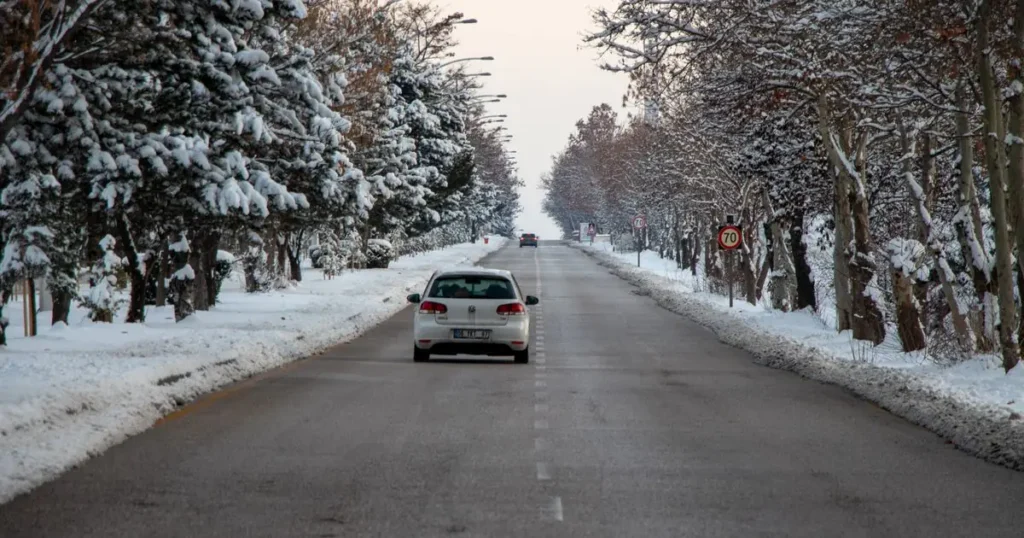
Every November, the same conversation repeats in claims offices across Utah: a car accident in the snow — and whose fault is it? A driver slides through an intersection on black ice, hits someone, and the insurer’s opening position is a shrug — “road conditions,” “act of nature,” “no one’s really at fault.”
Utah law disagrees. Snow doesn’t drive cars; drivers do. And the driver who was traveling too fast for conditions, following too closely for the surface, or running bald tires into a storm is a negligent driver — regardless of what the sky was doing.
If you were injured in a winter crash anywhere in the south valley — the ski-traffic corridors of Sandy, the Point of the Mountain grades in Draper, Bangerter’s icy overpasses in South Jordan, or the bench roads above Riverton and Herriman — here’s how a car accident in snow is actually assigned fault in Utah, and how to keep “it was the ice” from swallowing your claim.
Quick Answer: Whose fault is a car accident in snow or ice in Utah? Weather itself is never “at fault” in Utah — the law requires every driver to adjust speed and following distance to conditions under the state’s basic speed rule, so a driver who slides into you on snow or ice was, in most cases, driving too fast for conditions and is legally negligent. Your claim works the same as any other crash: PIP pays initial medical bills, and the at-fault driver’s insurer pays the rest once fault is established.
The Law That Decides Winter Crashes: “Reasonable and Prudent for Conditions”
Utah’s basic speed rule, Utah Code § 41-6a-601, doesn’t just set maximum limits — it requires drivers to operate at a speed that is “reasonable and prudent” for existing conditions, including weather and surface hazards. On dry pavement, 45 in a 45 is lawful. On packed snow, 45 in a 45 can be negligence.
That single principle dismantles most “it was the ice” defenses:
- Sliding is evidence, not an excuse. A vehicle that couldn’t stop was, by definition, traveling too fast or following too closely for the surface it was on. The conditions were visible to that driver before the crash.
- “I couldn’t see” cuts the same way. Driving into a whiteout at speed is the negligent choice; the whiteout isn’t a defense to it.
- Equipment counts. Bald tires, non-functioning defrosters, and snow-covered windshields are all negligence facts insurers hope you never ask about.
The narrow exception — a truly sudden, undetectable hazard no reasonable driver could have anticipated — is argued far more often than it actually applies. Black ice on a bridge deck in a canyon exit, on a morning when every forecast warned of freezing, is not a surprise in the legal sense.
How Winter Fault Disputes Play Out — By Scenario
Rear-ended on ice. The most common south-valley winter claim. The rear driver’s duty is to maintain a following distance adequate for the surface — and being rear-ended on ice in Utah is still, in most cases, the rear driver’s crash. Expect their insurer to argue you “stopped suddenly”; your answer is the basic speed rule plus scene evidence.
Intersection slides. A driver who slides through a red or a stop sign on snow has usually violated both the signal law and the speed-for-conditions rule. Camera footage and skid evidence decide these quickly when preserved early.
Chain-reaction storm pileups. Multi-car winter crashes on I-15 or Bangerter allocate fault in percentages across drivers — the same comparative-fault mechanics we covered in our Draper Point of the Mountain guide, applied to a snowfield. Each driver’s speed-for-conditions becomes its own mini-case.
A note on snow removal. Crashes shaped by unplowed or untreated public roads can raise governmental-liability questions — real, but narrow, with strict notice deadlines far shorter than the standard statute of limitations. If road maintenance played a role, get advice quickly.
The South Valley’s Winter Geography
Local roads write the crash patterns. In Sandy, ski-day traffic stacks up along the routes feeding Little Cottonwood — 9400 South and Wasatch Boulevard mix locals, tourists in rentals, and early-morning ice; our Sandy team sees the resulting rear-end claims every season. In Draper, the I-15 grades at the Point freeze first and thaw last — the Draper corridor pairs elevation with the valley’s heaviest commute. In South Jordan, Bangerter’s new overpasses and flyovers ice before the surface streets below them — bridge-deck black ice is the classic trap, and our South Jordan attorneys handle its aftermath each winter. And in Riverton and the Herriman bench, elevation gain means storms arrive earlier and linger longer than forecasts suggest — Riverton drivers know the difference a few hundred feet makes.
Protecting a Winter Claim: The Evidence That Melts
Winter crashes have the fastest-expiring evidence of any claim type — literally. The ice that caused the crash is gone by noon. So:
- Photograph the conditions, not just the cars — the road surface, visibility, snowbanks, and any untreated stretches. This is the single most valuable winter-specific step.
- Capture the other vehicle’s tires if you safely can — tread condition is negligence evidence that disappears when the car does.
- Note the forecast context — what warnings existed that morning. It rebuts “sudden hazard” arguments later.
- Get medical care promptly — cold and adrenaline together mask injuries even more effectively than adrenaline alone, and Utah’s PIP coverage pays your initial bills regardless of fault.
- Don’t accept “weather claim” framing on the first adjuster call. Politely decline the recorded statement, and don’t agree to any characterization of the crash as unavoidable.
One Firm for the Whole South Valley
Winter claims reward local knowledge — which bridge decks ice, which corridors stack ski traffic, what the storm actually did that morning. At Porrazzo Rawlings Accident & Injury Law, that’s home ground, and our promise holds across every city in this guide: big firm settlements with small firm personal attention. We’ve recovered hundreds of millions for injured Utahns while keeping our caseload deliberately small — you are never just a case number, and you work directly with a real attorney from your first call to your final resolution, never a paralegal or case-manager relay. Several of our attorneys are former insurance adjusters; we know exactly how “act of nature” gets written into a claim file, and how to write it back out. See our Utah car accident practice for the full claim framework.
Frequently Asked Questions
The other driver says the ice made the crash unavoidable. Is that a valid defense in Utah? Rarely. Utah’s basic speed rule requires adjusting to conditions, so sliding into another vehicle is usually itself evidence of driving too fast or following too closely for the surface. The “sudden unavoidable hazard” exception is narrow and fact-dependent.
I slid a little too — can I still recover? Possibly, yes. Utah’s comparative negligence system allows recovery as long as you were less than 50% at fault, with compensation reduced by your percentage. Sharing some fault does not zero out a claim.
Does it matter that the road wasn’t plowed? It can add a governmental or contractor dimension to the claim, but those claims carry strict, short notice deadlines. Raise the road-maintenance issue with an attorney quickly rather than assuming it’s an option later.
Should I wait until spring to deal with the claim since everyone’s busy in winter? No — winter claims have the fastest-vanishing evidence of any crash type. Conditions photos, tire evidence, and camera footage need to be preserved in days, even though Utah’s filing deadline is years away.
Injured in a Winter Crash? Get Answers Before the Ice Melts — Free
If a driver who couldn’t handle the conditions injured you anywhere in the south valley this winter, don’t let “weather” become the insurer’s whole story. Call (801) 553-0505 to speak directly with an attorney — consultations are free, we’re available 24/7, and with our zero-fee guarantee you pay nothing unless we win or settle your case. We’ll come to you, snow or shine.
Disclaimer: This article is for informational purposes only and does not constitute legal advice. Reading this article does not create an attorney-client relationship. Every case is different, and no guarantees or promises can be made regarding the outcome of any claim or the amount of any compensation. Past results do not guarantee future outcomes. If you have been injured, consult directly with a qualified Utah attorney about your specific situation.