
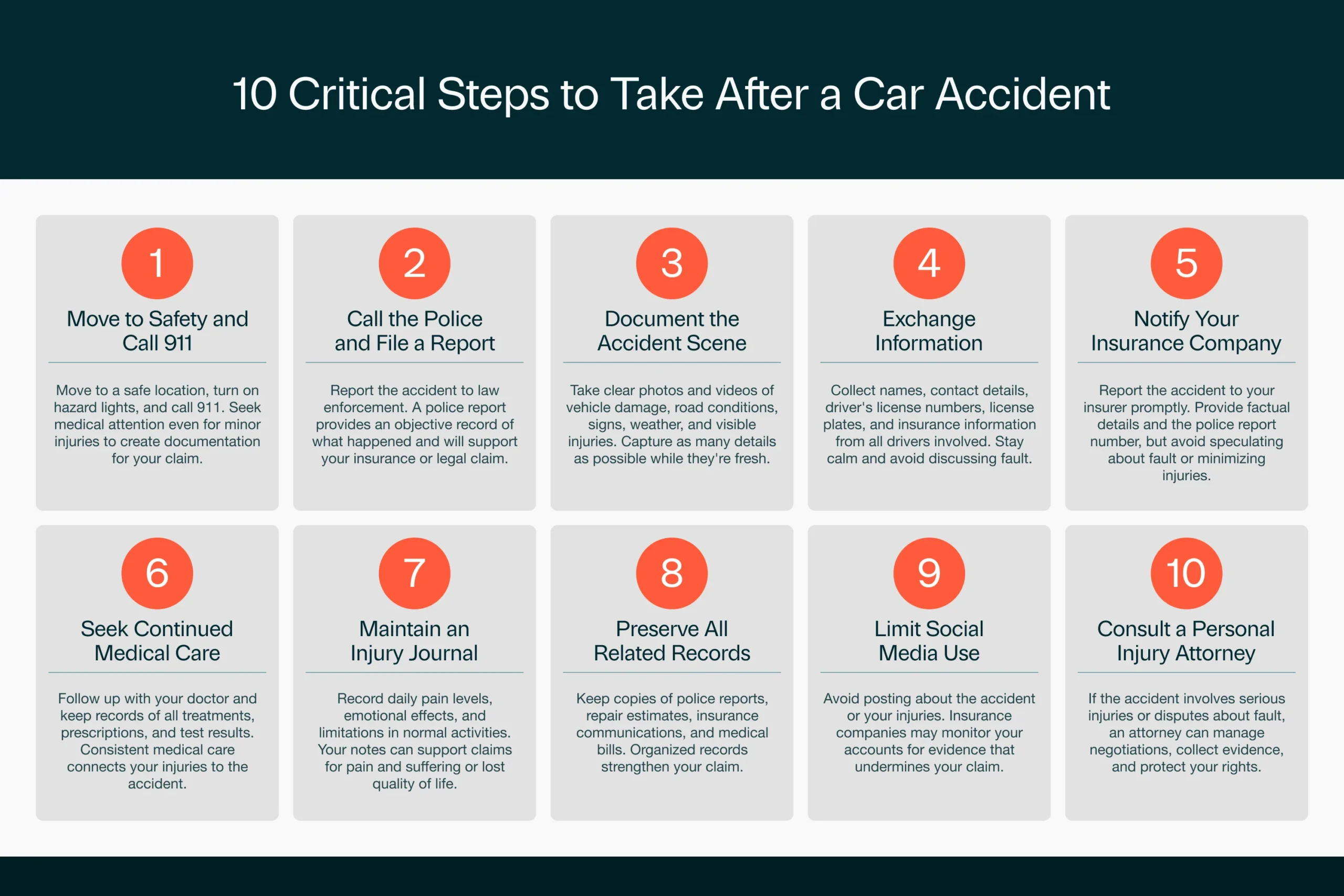
A car accident can turn your life upside down in a matter of seconds. Beyond the shock and potential injuries, there are critical legal and financial consequences to consider. The steps you take immediately following a crash can make the difference between a smooth insurance process and a drawn-out battle for compensation. If you hope to protect a future claim, knowing what to do right away is essential.
This guide outlines the most important steps to take after a car accident to safeguard your rights, strengthen your case, and protect your financial future.
Step 1: Ensure Safety and Call for Help
The first priority is always safety. Move yourself and others out of the roadway if possible and turn on hazard lights to prevent further collisions. Dial 911 immediately to report the accident and request medical assistance if anyone is injured.
Even if your injuries seem minor, it’s critical to seek medical attention. Many accident-related injuries, such as concussions or internal bleeding, may not be immediately obvious. Medical documentation also provides important evidence for your claim.
The National Highway Traffic Safety Administration (NHTSA) emphasizes the importance of prompt evaluation: “Even if you don’t think you are hurt, be cautious. Not all injuries are apparent right away.”
Step 2: Call the Police and File a Report
After ensuring safety, contact local law enforcement to report the accident. In many states, it’s legally required if there are injuries or property damage beyond a certain amount.
A police officer will investigate the scene, speak with drivers and witnesses, and prepare an official accident report. This report serves as an objective record of the incident and can be crucial when filing insurance claims or pursuing legal action. Always ask for the report number or instructions on how to obtain a copy.
Step 3: Document the Accident Scene
While waiting for law enforcement to arrive, gather as much evidence as possible. Use your phone to take photos and videos of:
- Vehicle damage (all cars involved)
- Road conditions, skid marks, or debris
- Traffic signals or signs near the scene
- Weather and lighting conditions
- Visible injuries sustained in the crash
The more details you document, the stronger your claim will be. Over time, memories fade and physical evidence may disappear, so capturing this information right away is invaluable.
Step 4: Exchange Information
Exchange key information with all drivers involved, including:
- Names, phone numbers, and addresses
- Driver’s license numbers
- License plate numbers
- Insurance providers and policy numbers
If there are witnesses, politely ask for their contact details as well. Witness statements often serve as powerful evidence in contested claims.
It’s also important to remain calm and professional. Avoid arguing about fault or making statements that could be interpreted as admissions of liability. Even a casual “I’m sorry” could later be used against you.
Step 5: Notify Your Insurance Company
Most auto insurance policies require prompt reporting of accidents. Call your insurance provider as soon as possible, provide factual details, and share the police report number if available.
When speaking to insurance adjusters, avoid speculating about fault or minimizing your injuries. Insurance companies may use any inconsistent statements against you later to deny or reduce your claim.
Step 6: Seek Continued Medical Care
Even if you received emergency treatment, follow up with your doctor for a full evaluation. Some injuries develop gradually, and consistent medical records are essential to connect your injuries directly to the accident.
Keep copies of:
- Medical bills
- Test results
- Prescriptions
- Physical therapy records
Skipping appointments or failing to follow medical advice may give insurers grounds to question the severity of your injuries.
Step 7: Maintain an Injury Journal
In addition to formal medical records, keeping a personal injury journal can strengthen your case. Record:
- Daily pain levels and symptoms
- Emotional struggles such as anxiety or depression
- Limitations in your normal activities
- Time missed from work or hobbies
This journal provides a personal perspective on how the accident has impacted your quality of life, which is especially helpful when seeking non-economic damages like pain and suffering.
Step 8: Preserve All Related Records
Staying organized will help immensely during the claims process. Create a folder for all accident-related materials, including:
- Police reports
- Repair estimates
- Insurance correspondence
- Wage loss documentation
- Medical bills and treatment notes
These records provide the foundation of your claim and prevent important details from being lost or overlooked.
Step 9: Limit Social Media Use
Insurance companies and defense attorneys often monitor social media accounts for evidence that contradicts your claims. For example, a seemingly harmless photo at a family event could be used to argue you are not as injured as you claim.
It’s best to avoid posting anything about the accident or your injuries until your claim is resolved.
Step 10: Consult with a Personal Injury Attorney
While some accidents are minor and easily resolved through insurance, more serious accidents involving significant injuries, disputes about fault, or large financial losses often require legal representation.
A personal injury attorney can:
- Evaluate the strength of your claim
- Handle negotiations with insurance companies
- Gather additional evidence such as surveillance footage or expert testimony
- Ensure compliance with deadlines, such as the statute of limitations
- Represent you in court if necessary
Having an experienced advocate on your side helps level the playing field against powerful insurance companies.
Why Taking Immediate Steps Matters
Protecting your claim isn’t just about being thorough—it’s about being proactive. Insurance companies are in the business of minimizing payouts, and any gaps in your evidence or delays in action can weaken your case.
According to the NHTSA, the economic impact of motor vehicle crashes in the United States exceeds $340 billion annually. With such high stakes, taking immediate steps to secure your rights and evidence is essential.
Take the Next Steps
Car accidents are overwhelming, but knowing what to do in those critical first moments can protect your health, finances, and legal rights. Start by ensuring safety, contacting law enforcement, and seeking medical care. From there, document the scene, exchange information, notify your insurer, and carefully preserve all records. Avoid risky social media posts and consider consulting an attorney if the accident involves serious injuries or complex disputes.
By taking these steps, you create a solid foundation for protecting a future claim and ensuring you receive the compensation you deserve.