
Scheduling a free personal injury consultation can feel like a big step. For many people, this meeting marks the first time they speak with a lawyer about their accident and injuries. The consultation is designed to give both the attorney and the potential client a chance to understand each other, review the facts, and decide whether to move forward together.
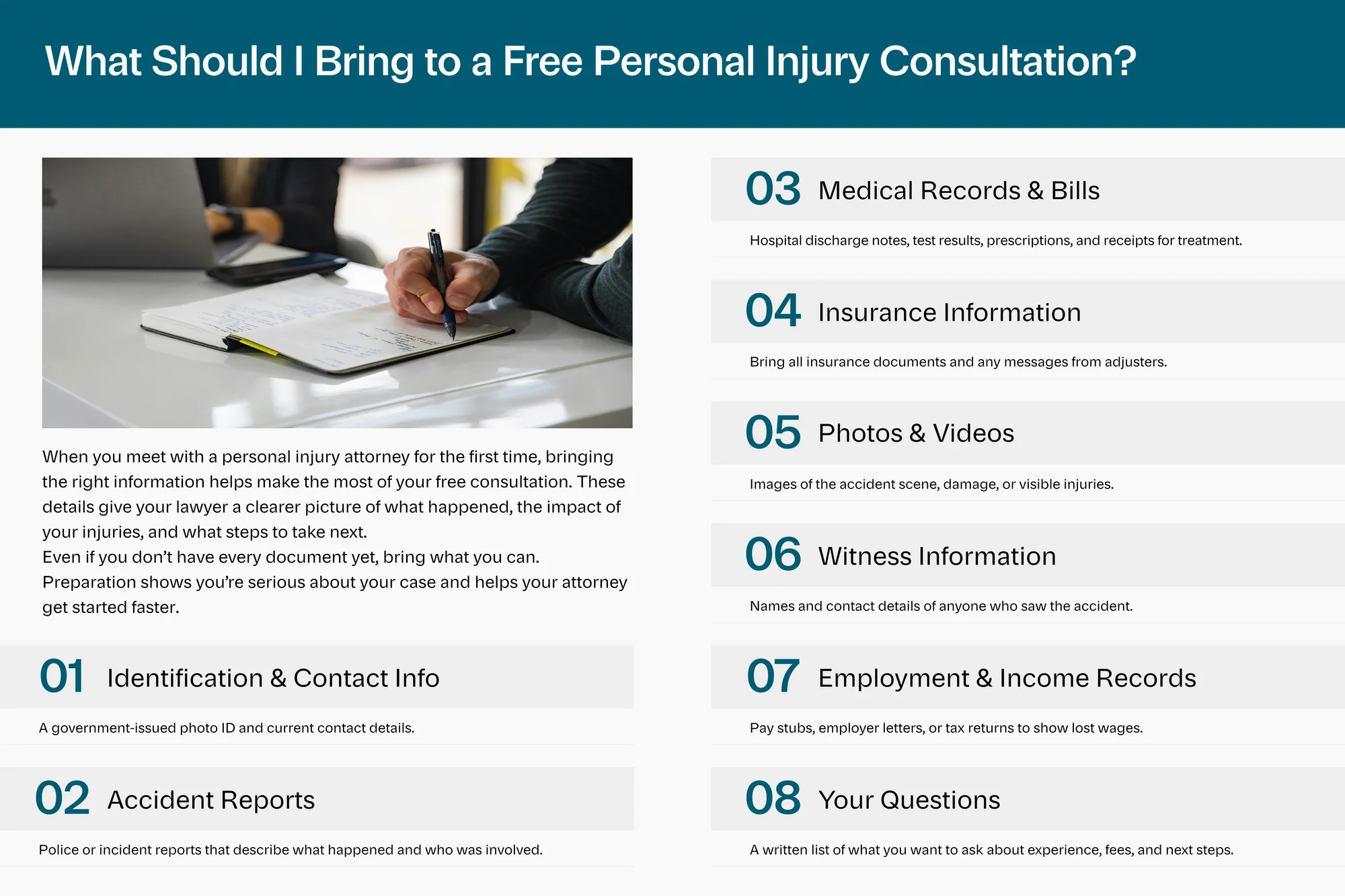
But one of the most common questions is: What should I bring to a free personal injury consultation? Bringing the right information and documents can help the attorney quickly evaluate the strength of a case and outline possible next steps.
Why Preparation Matters
A personal injury attorney uses the consultation to piece together the story of what happened. Having documents and details ready provides clarity, reduces guesswork, and allows for a more productive conversation. Even if someone doesn’t have every single document, bringing what they can shows the attorney they’re serious about the case.
The American Bar Association notes: “The first meeting is your chance to give the lawyer the basic facts of your case and ask about their experience and strategy.” This guidance highlights how important it is to bring information that helps tell the story clearly and completely.
Identification and Contact Information
Start with the basics. Attorneys will need to know who they are meeting with and how to stay in touch. Bring:
- A government-issued photo ID (driver’s license or passport).
- Current address, phone number, and email.
- Emergency contact information, if relevant.
This ensures accurate records from the beginning and makes follow-up communication seamless.
Accident Reports and Documentation
For most personal injury cases, accident reports are a foundation. If the injury involved a car crash, a police report is often critical. For workplace injuries, an incident report filed with the employer may be necessary.
Bringing copies of these reports allows the attorney to see how the accident was officially recorded and whether key details—like fault, location, or witnesses—were documented. Even preliminary or partial reports can help shape the discussion during the consultation.
Medical Records and Bills
Medical documentation provides evidence of injuries, treatment, and costs. It is one of the strongest ways to show how an accident has impacted a person’s health and finances. Items to bring include:
- Hospital discharge papers.
- Emergency room records.
- Diagnostic test results (X-rays, MRIs, lab results).
- Prescription lists.
- Bills or receipts from treatment and medications.
These records help the attorney connect the accident directly to physical harm. If follow-up treatment is ongoing, noting future appointments or expected costs is equally valuable.
Insurance Information
Insurance often plays a major role in personal injury cases. Whether dealing with auto, health, or homeowner’s insurance, attorneys will want to see policy details. Bring:
- Auto insurance card and policy paperwork.
- Health insurance details.
- Any correspondence with insurance adjusters.
If an insurance company has already contacted the injured party with settlement offers or requests for information, those letters should be shared at the consultation. Attorneys can review them and advise on next steps.
Photographs and Physical Evidence
Photos and videos can bring details to life more effectively than words alone. Examples include:
- Pictures of the accident scene.
- Photos of vehicle damage.
- Images showing visible injuries (bruises, cuts, scars).
- Surveillance or dashcam footage, if available.
Even smartphone pictures taken right after the incident can be incredibly valuable for a personal injury attorney evaluating the case.
Witness Information
If anyone saw the accident happen, their perspective could strengthen the case. Bring names, phone numbers, or written statements from witnesses. Even if contact information is incomplete, providing what’s available allows the attorney to begin building a list of potential testimonies.
Employment and Income Records
If injuries led to missed work or reduced ability to earn income, proof of employment and pay history is key. Helpful documents include:
- Recent pay stubs.
- A letter from an employer confirming missed workdays.
- Tax returns showing income trends.
These details help the attorney assess claims for lost wages or diminished earning capacity.
Questions for the Attorney
A consultation isn’t only about giving information—it’s also a chance to ask questions. Writing them down ahead of time prevents forgetting something in the moment. Common questions might be:
- How many cases like mine have you handled?
- What is your approach if the insurance company refuses to settle?
- What fees or costs should I expect if we move forward?
By asking clear questions, individuals can leave the consultation with a better sense of whether the attorney is the right fit.
What If Documents Are Missing?
Many people worry about not having every piece of paperwork ready before the consultation. That’s natural, but attorneys understand that accidents and injuries disrupt lives. Even if documents are missing, bring what is available and make a list of what still needs to be gathered. A personal injury lawyer can provide guidance on how to request missing medical records, obtain police reports, or track down insurance paperwork.
The consultation is the starting point, not the finish line. The attorney’s role includes helping clients gather and organize what’s missing.
Organization Tips for the Meeting
Arriving with an organized folder can make the consultation smoother. Consider:
- Using a binder with labeled sections (medical, insurance, employment, photos).
- Keeping original documents at home and bringing copies.
- Writing a timeline of events leading up to and after the accident.
A clear presentation saves time during the consultation and helps the attorney see patterns quickly.
The Bigger Picture
Bringing the right materials to a consultation does more than prepare an attorney—it helps the injured person feel in control of their case. The meeting sets the tone for the attorney-client relationship.
For any personal injury professional across the country, the consultation is the first chance to assess trust, compatibility, and communication. Having documents and questions in hand allows that conversation to focus on strategy and recovery, rather than missing details.
Get Ready to Win Compensation
At its core, the question “What should I bring to a free personal injury consultation?” is about preparation and partnership. Identification, accident reports, medical records, insurance documents, photos, witness details, and employment records all contribute to a clearer case picture. Questions for the attorney create an open dialogue.
The American Bar Association’s reminder that the first meeting is about sharing facts and learning about the lawyer’s approach underscores the importance of preparation. Arriving ready not only helps the attorney—it helps the injured person feel confident about taking the next step toward recovery and justice.