
After a crash, you’re hurt, you’re behind on everything, and every billboard, bus bench, and search ad in Utah is promising you millions. Here’s the uncomfortable truth about that moment: most injury victims hire the first firm that picks up the phone — and the difference between firms shows up months later, in the settlement check and in how the process felt getting there.
You don’t need to become a legal expert to choose well. You need ten good questions and the willingness to ask them in a free consultation — where the answers cost you nothing. As attorneys who spent years inside the insurance industry before representing injured people, we’ll tell you exactly what each answer reveals. And yes — we’re happy to be asked all ten ourselves.
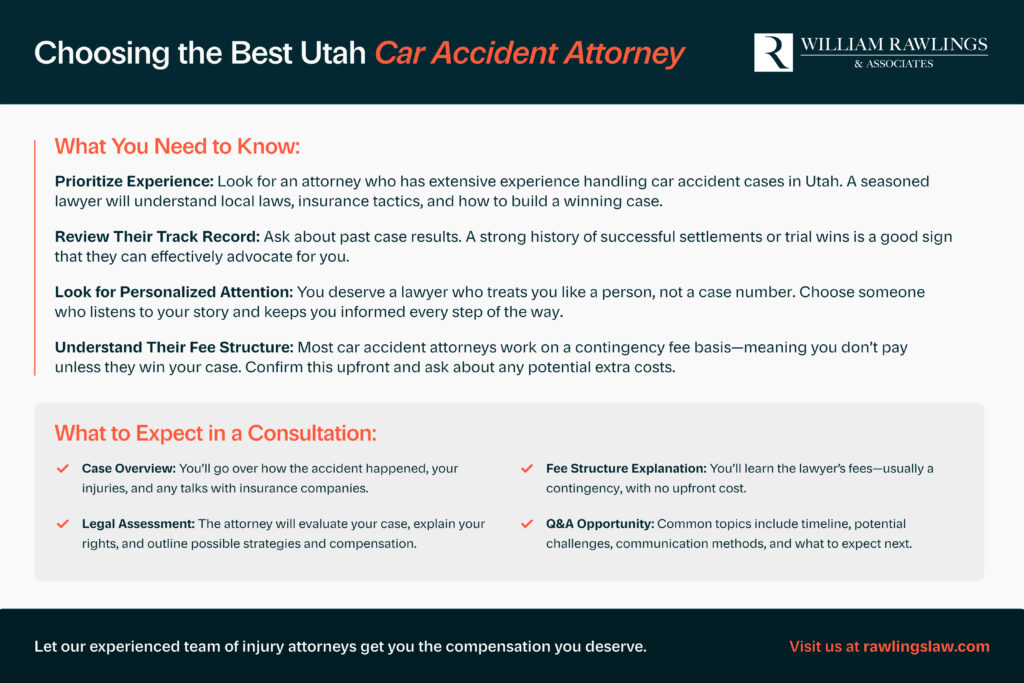
What should you ask before hiring a car accident attorney in Utah? Before signing with any injury firm, ask ten things: who actually handles your case day to day, how many cases that person carries, whether the firm tries cases or only settles, their experience with your crash type, how fees and case costs really work, who pays costs if you lose, how the property damage claim is handled, how often you’ll get updates, what they know about the insurer on your claim, and why they believe your case has value. The answers — and how directly they’re given — tell you nearly everything about the next twelve months.
1. “Who will actually handle my case — an attorney, or a case manager?”
This is the single most revealing question in injury law. At high-volume firms, your file is worked by case managers and assistants, and the attorney whose face is on the billboard may never touch it. Ask directly: Will I have an attorney’s direct contact? Is the person negotiating my settlement the same person I’m meeting today?
At Porrazzo Rawlings, the answer is structural: your case is handled by the same attorney from day one until your check is in hand. No paralegal triage. When you call with a question at week nine, the person who answers knows your file because it’s theirs.
2. “How many open cases does my attorney carry?”
Volume is the business model of the biggest advertisers — and the enemy of attention. An attorney carrying hundreds of files can only manage exceptions; everything else gets processed. There’s no magic number, but the answer (and whether the firm will even give you one) tells you whether your case will be worked or processed. We intentionally limit our caseload for exactly this reason: attention is the product.
3. “When did you last take a case to trial?”
Roughly 98% of our cases settle without going to court — and that’s typical of good outcomes. So why does trial experience matter? Because insurers track which firms actually try cases, and they price settlements accordingly. A firm that always settles teaches insurers its threats are empty. Ask when the firm last tried a case and what happened. You’re not hoping for trial; you’re buying the leverage that trial-readiness creates.
4. “How much of your practice is cases like mine?”
A firm that mostly handles other practice areas and takes the occasional crash case learns on your file. Ask what share of the practice is motor vehicle claims, and whether they’ve handled your specific situation — a disputed-fault intersection crash, a semi-truck claim with a commercial carrier, a motorcycle case where rider bias is in play. Utah-specific fluency matters too: PIP thresholds, comparative negligence percentages, and local court practices shape every claim here. (Our practice is built around exactly these cases — see what a Utah car accident lawyer at our firm handles and how Utah’s claim system actually works.)
5. “Have you ever worked for the insurance industry?”
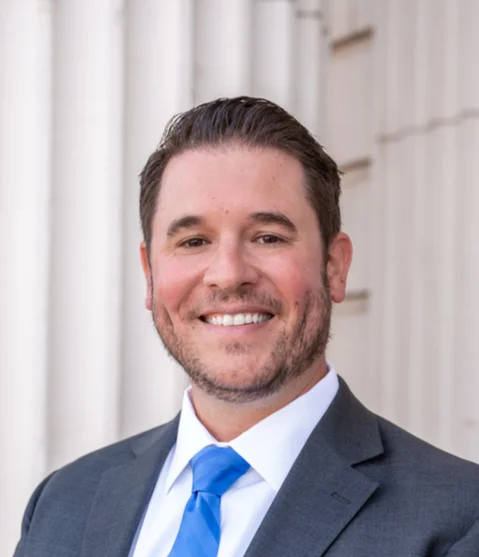
Few clients think to ask this — and it’s the question we most want asked, because almost no firm in Utah can answer it the way we can. Several of our attorneys are former insurance adjusters and defense counsel, including Bill Rawlings, a former insurance defense lawyer for one of the largest insurers in the nation. Whoever you hire, ask what they actually know about how the other side values claims. “We’re aggressive” is a slogan; “here’s how the adjuster will build the reserve on your claim” is knowledge.
6. “How do your fees and case costs actually work?”
Nearly every Utah injury firm works on contingency — you pay a percentage of the recovery, nothing up front. The differences hide in the details, so ask three things: What’s the percentage, and does it change if the case goes to litigation? Who advances case costs (filing fees, records, evaluations)? And who pays those costs if the case is lost? We operate on a zero-fee guarantee — you pay nothing unless we win or settle — and we advance all necessary costs so you have no out-of-pocket expenses. Whatever firm you’re interviewing, get the cost answer in writing before you sign. For the fuller picture of what representation costs in Utah, our guide on what a car accident attorney actually costs breaks it down.
7. “Will you handle my vehicle damage too, or just the injury claim?”
A surprising number of injury firms leave the property damage claim — your car, the rental, diminished value — for you to handle alone while they work the injury. Ask. We pursue the vehicle damage alongside the injury claim, because being nickel-and-dimed on your totaled car while recovering from injuries is exactly the kind of thing you hired a firm to prevent.
8. “How often will I hear from you, and who calls me back?”
Communication failure is the #1 complaint injured clients file against their own lawyers. Ask what the update cadence is, how quickly calls are returned, and whether you can reach your attorney — not a portal, not an assistant — when something happens. Then notice how the consultation itself feels: a firm that rushes you before you’ve signed will not slow down after.
9. “What do you know about the insurance company on my claim?”
Every insurer negotiates differently — some pay fairly when pushed, some deny reflexively, some drag every claim toward the courthouse steps. An experienced Utah firm knows the adjusters, the carrier tendencies, and the local defense counsel by name. Ask what the firm knows about your at-fault driver’s carrier and how that shapes strategy. (And until you’ve hired someone, be careful what you say to that carrier yourself — our guide on how to talk to an insurance adjuster covers exactly that.)
10. “Why do you think my case has value — and what could hurt it?”
Beware the firm that promises a number in the first meeting. No honest attorney can guarantee an outcome, and inflated first-meeting valuations are a sales tactic, not a strategy. What you want instead is a straight answer about both sides of your case: what makes it strong, what the insurer will attack, and what has to happen next to protect it. Candor in the consultation predicts candor for the next year.
The Pattern Behind All Ten Questions
Notice what these questions actually measure: not slogans, but structure. Who touches the file, how many files they carry, whether trial is real, whether the fee terms are clean, whether communication is designed or accidental. Big firm settlements with small firm personal attention isn’t a tagline for us — it’s the structure these ten questions are built to detect, wherever you find it.
The firm has been helping injured Utahns since 1990, with 100+ years of combined experience, a 99% success rate, and a 4.9 Google rating — and nearly half of our new clients come referred by former clients, which is its own answer to question #8. If you’re comparing firms for a crash that wasn’t your fault, start with what our Utah car accident practice handles — then bring us all ten questions.
Frequently Asked Questions
What’s the difference between a car accident lawyer and a personal injury lawyer?
Car accident law is one area within personal injury law. Most Utah injury firms handle both; what matters is what share of the firm’s active practice is motor vehicle claims like yours, and how deep their experience runs in Utah’s PIP and comparative-negligence system.
Can I switch car accident lawyers in Utah if I’m unhappy with mine?
Yes, at any point before settlement. Your prior firm may hold a lien for work performed, which is typically resolved between the firms out of the same contingency fee — meaning switching usually costs you nothing extra. If your calls aren’t being returned, a second opinion is free.
Should I hire the firm with the biggest ads and billboards?
Ad budget measures marketing, not results in your case. Some heavily-advertised firms do excellent work; others run volume models where your file is processed by case managers. The ten questions above cut through the advertising either way — ask them of every firm, including the biggest ones.
Do I need a local Utah firm, or can a national injury brand handle my claim?
Your claim runs on Utah law — PIP thresholds, the comparative negligence rule, four-year filing deadlines, and local courts and insurers. National brands typically refer Utah cases to local counsel anyway (while taking a share of the fee). Interview the attorney who will actually work the file, wherever the sign on the door points.
Bring Us Your Ten Questions — Free
The best way to use this list is in a live conversation, where you can hear how directly a firm answers. Ours are yours to ask, any hour: call (801) 553-0505 for a free consultation — available 24/7, zero-fee guarantee, and we’ll come to you anywhere in Utah.
Disclaimer: This article is for informational purposes only and does not constitute legal advice. Reading this article does not create an attorney-client relationship. Every case is different, and no guarantees or promises can be made regarding the outcome of any claim or the amount of any compensation. Past results do not guarantee future outcomes. If you have been injured, consult directly with a qualified Utah attorney about your specific situation.