
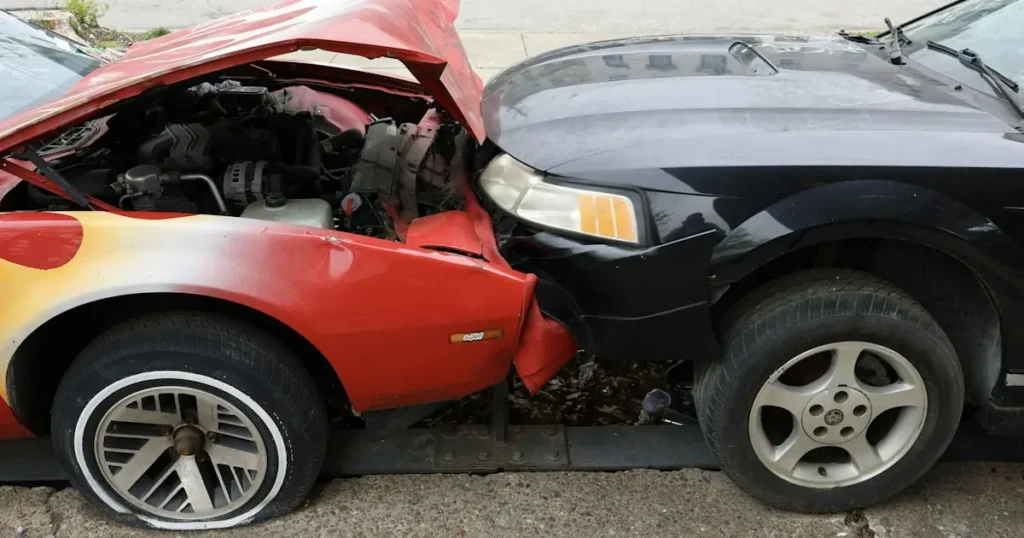
Here’s a math problem Utah’s insurance minimums create every week: a driver carrying the state’s minimum liability coverage causes a crash with $200,000 in medical bills, surgeries, and lost work. Their policy pays its limit — and stops. The at-fault driver was insured. They just weren’t insured enough.
That gap has a name — underinsured — and a purpose-built solution most Utah drivers already own without knowing how it works: underinsured motorist (UIM) coverage. In serious-injury claims, UIM is routinely the difference between a recovery that matches the harm and one that matches a stranger’s shopping decision at an insurance counter.
Here’s how an underinsured motorist claim in Utah actually works — including the one procedural misstep that can void the coverage entirely.
Quick Answer: What is an underinsured motorist claim in Utah? A UIM claim uses your own policy’s underinsured motorist coverage to pay the gap between the at-fault driver’s liability limits and your actual damages. In Utah, UIM coverage must be offered with every auto policy and waived only in writing; the typical sequence is to recover the at-fault driver’s policy limits first, then claim the remaining damages from your own UIM coverage up to its limits. Critical trap: most UIM policies require your insurer’s written consent before you accept the at-fault driver’s limits — settling without it can forfeit the UIM claim.
When UIM Becomes the Real Claim
The scenario is depressingly standard in serious crashes. High-energy collisions — the interstate pileups and truck-adjacent crashes we’ve written about from the Point of the Mountain corridor — produce six-figure injury pictures, while a large share of at-fault drivers carry limits sized to Utah’s legal minimums. Once their carrier tenders the policy limits, three paths exist:
- Accept the limits and absorb the gap. The default outcome for unrepresented claimants — and the one every other path exists to prevent.
- Pursue the at-fault driver personally. Legally available; practically limited. Judgments against underinsured individuals rarely collect, which is precisely the problem UIM was invented to solve. (When policy limits are exhausted and litigation questions arise, our popular explainer on how bodily injury claims become lawsuits after policy limits maps that terrain.)
- Claim your own UIM coverage — the path this guide covers.
Utah’s UIM framework, Utah Code § 31A-22-305.3, requires the coverage to be offered with every policy and rejected only in writing — so unless you signed a waiver, your declarations page almost certainly lists it. The Utah Insurance Department publishes the consumer-side coverage requirements; what follows is the claim-side reality.
How the Sequence Works — and the Consent Trap Inside It
A UIM claim runs in order:
Step 1: Exhaust the at-fault coverage. You establish fault and damages against the at-fault driver’s insurer and recover their policy limits. UIM is excess coverage — it pays above their limits, not instead of them.
Step 2: Get your insurer’s written consent before accepting those limits. This is the trap that voids more UIM claims than any other. Most Utah UIM policies require the insured to obtain the UIM carrier’s consent before settling with (and releasing) the at-fault driver — because your settlement extinguishes your insurer’s right to pursue that driver for reimbursement. Accept the limits without written consent, and the carrier may deny the entire UIM claim on that basis alone. The fix is procedural and simple when done in order: notify, request consent in writing, wait for it, then settle.
Step 3: Present the UIM claim. Your remaining damages — medical bills and future care beyond the first settlement, lost income and earning capacity, pain and suffering — now go to your own carrier, documented exactly as any liability claim would be, up to your UIM limits.
Step 4: Negotiate against your own insurer. As with UM claims — UIM’s sibling for uninsured drivers, covered in our companion guide to claims when the at-fault driver has no insurance at all — your carrier evaluates adversarially. Causation disputes, valuation pushback, and slow-walking are standard; policy-provided arbitration and litigation are the backstops that keep negotiations honest.
Why Serious Claims Are Won at the Coverage-Mapping Stage
Everything above assumes the full coverage picture is known — and in serious claims, it rarely maps itself. The at-fault side may hold multiple policies (personal, employer, umbrella). Your household may hold stackable or multiple UIM coverages depending on policy terms. The order of recovery, the consent requirements, and the interplay with health-insurance liens all determine what you actually keep.
This mapping — before any number is discussed — is where our Utah car accident team starts every serious-injury file: identify every policy, sequence every claim, and protect every consent requirement so no coverage gets forfeited on procedure. Several of our attorneys are former insurance adjusters and defense counsel; in UIM claims — where the opposing playbook is your own carrier’s — that history is the practical advantage it sounds like. And the standard Utah machinery runs throughout: PIP pays initial bills regardless of fault, comparative negligence preserves recovery below 50% fault, and the four-year statute governs the underlying claim while policy notice-and-consent clocks run far shorter.
Frequently Asked Questions
How do I know if I have UIM coverage and how much? Your declarations page lists it — Utah requires UIM to be offered and waived only in writing, so most drivers carry it, commonly at limits matching their liability coverage. If your limits are minimal, this is the coverage most worth increasing at renewal; it’s the one that protects you.
The at-fault insurer tendered their policy limits fast. Isn’t that good news? It’s a signal — carriers tender limits quickly when they know the damages exceed them. Before accepting, two things must happen: the full damages picture should be documented, and your UIM carrier’s written consent must be in hand. Fast tenders are where the consent trap catches people.
Can my insurer raise my rates for using UIM coverage I paid for? Utah insurers generally can’t penalize not-at-fault claims, and a UIM claim exists only because someone else’s negligence exceeded their coverage. Confirm your carrier’s practice in writing if it concerns you — but don’t leave purchased coverage unused over rate fear.
What if my UIM carrier says my claim is worth less than the gap? Valuation disputes with UIM carriers are routine and contestable — through negotiation, arbitration where the policy provides it, or suit. The claim is valued on documented damages, not on the carrier’s opening position.
Serious Injuries, Small Policy? Map Every Dollar of Coverage — Free
Before you accept anyone’s limits, know what your own policy owes you — and protect the consent requirements that keep it owing. Call (801) 553-0505 to speak directly with an attorney — consultations are free, we’re available 24/7, and with our zero-fee guarantee you pay nothing unless we win or settle your case, with all case costs advanced.
Disclaimer: This article is for informational purposes only and does not constitute legal advice. Reading this article does not create an attorney-client relationship. Policy terms vary and control individual coverage questions; every case is different, and no guarantees or promises can be made regarding the outcome of any claim or the amount of any compensation. Past results do not guarantee future outcomes. If you have been injured, consult directly with a qualified Utah attorney about your specific situation.